An Open Letter to My Son

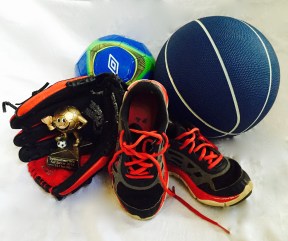
IMG_2739Son, you are seven years old and I couldn’t be more proud of you.  Yesterday, I watched you play a basketball game against a really tough team with older and bigger kids.  I saw something happen to you and it made my heart almost burst with joy.

I would NEVER say this to you, but you are probably the worst player on the team.  What a horrible thing to think about your kid, but it’s true.  You can’t dribble and have never made a point during the game.  You have absolutely no interest in the ball.  You just really like running up and down the court with the pack of kids.  It’s always been that way; soccer at 3, T-ball at 5 and 6, soccer again at 4, 5 and 6, and basketball at 6 and 7.  You never seem to understand the concept of competition and winning.  The ball is an afterthought and is only noticed when you practically trip over it.  I don’t even think that you realize some parents are keeping score.

You scored once during a soccer game and did a little dance on the field, looking around to find me and your daddy in the crowd.  We cheered you on even though you scored a goal for the other team.  It didn’t matter because during that same game, you were the kid that saw someone fall, turned around and helped them up.  You were also the kid that the parents would turn to me and say, “I just love watching him play, he always has a smile on his face.”

You guys played a really tough game yesterday.  That team wasn’t just better, they were meaner.  They were getting to that age when the drive to win at all costs has started to take hold.  They threw elbows, tripped the littler kids, the bigger kids yelled at their own teammates to give them the ball.  You were right in the middle of it all, unfazed.  Your job, since you can’t dribble and can’t throw, was to block.  You stood in front of the tallest, meanest kid for the whole game, frantically waiving your arms, joyful, with that smile on your face.  He kept swatting at you like a little fly, but you didn’t budge.  You didn’t whither.  You didn’t give up.  He elbowed you in the chest.  You clutched your chest with one hand, winced, and kept waiving your other hand in his face.  It was glorious.

If you never learn to dribble, never make a basket, never get a pitch and always use a T, if you always kick the ball into the wrong goal, none of that will ever matter to me.  You’ve got heart.  You’ve got perseverance.  You are joyful and you are unstoppable.

Posted in My Stories | Tagged , , , | Comments Off on An Open Letter to My Son

Nothing Rhymes with Zika

mosquito-1-1549195-640x480Nothing Rhymes with Zika, except for Eureka!  Which is totally inappropriate.  I am alluding to the Zika virus which has quickly infiltrated the media because of the devastating effects the virus has had on fetal cranial development.  What is it?  How dangerous is it?  Should we be worried?

Here are the facts:

  • The Zika virus is BAD especially if you are a fetus inside a woman who is affected
  • The Zika virus is transmitted by the mosquito, Aedes aegypti (the same mosquito that transfers Dengue and Chikungunya)
  • The Zika virus was first discovered in the 1950’s, but has received international attention when it was found in Brazil in May 2015
  • Since then >3500 babies in Brazil have been born with microcephaly, a serious and often life-threatening malformation of the skull that leads to abnormal brain development

The Zika virus isn’t new, it was first discovered in the 1950’s and has remained isolated to Africa, SE Asia, and the Pacific Islands.  It has traveled via its mosquito vector to Mexico, Somoa, South and Central America, and the Caribbean in recent years.  It wasn’t until the catastrophic discovery of >3500 babies born with microcephaly in Brazil between October 2015 and January 2016 that the world took notice.

The CDC has issued travel advisories for pregnant women and some countries including Colombia, Ecuador, El Salvador, and Jamaica are advising women against getting pregnant until further information is gathered.

The virus is transferred from mosquito to human via bite.  For 80% of those infected there are no symptoms.  For others, it can result in a mild illness with fever, joint pain, rash and conjunctivitis (pink eye) that can last from 1-7 days.  For some it has resulted in Guillain Barre Syndrome and hospitalization, but this is rare.

The mosquitoes tend to bite during the day.  The CDC recommends wearing long sleeve shirts and long pants in areas affected, using mosquito netting if spending prolonged time outdoors, application of mosquito repellants, and emptying any sources of standing water.  Pregnant woman that are suspected to be infected or exposed should seek medical attention.  Providers will likely perform serial ultrasounds to evaluate fetal head development and refer to a maternal/fetal specialist.  There is no known treatment for the fetus and the transmission and infectivity rates are not fully understood.

Here’s my Eureka! moment.  The Summer Olympics are scheduled to start in August 2016 and will be hosted in Rio de Janeiro, Brazil.  People from all over the world will be flocking to the area, staying a short time and then returning to their homes.  Could this be the beginning of a worldwide epidemic?

The mosquito that carries the Zika virus, also known as Aedes aegypti, in direct relationship to global warming trends, have been moving their way into more northern latitudes increasing its range of infectivity.  The Zika virus and the Aedes aegypti mosquito have most recently been found in Puerto Rico, about 1000 miles from the Florida coast.

Travelers to endemic countries returning home could allow for local spread of the Zika virus into otherwise unaffected regions, regions that prior to increasing temperatures would not have been habitable to the Aedes aegypti mosquito.  So far no Zika virus has been isolated in mosquitoes found in North America.


Posted in Medical News | Tagged , , , | 6 Comments

Pap Smears, Rectal Exams, and Other Dinner Conversation

scrunched-eyes-1431449-639x424I remember my first pap smear. Not the first one I had, but the first one I gave, likewise for my first rectal exam. Luckily, I haven’t had one of those yet.

Medical schools hire actors to play the part of the patient. Typically, the actor gets to portray someone with mundane medical complaints and the medical student “practices” their interviewing techniques and medical exam skills on them. A rare few get to be the recipient of the Pap smear and rectal exam. In fact, they seem so rare as to be expert in their field.

Let me set the scene. The female “patient” is waiting in the exam room. A group of medical students stand outside the door. One by one they enter the room with a certified physician chaperone. With these particular exams, no one bothers with the pretense of a prepared scenario. One just gets right to it. There is no chief complaint, no conversation, and no awkward banter. We all know what we are there for; each student is about to perform their first pap smear, testicular, and rectal exam.

To say that I was nervous about performing the pap smear is an understatement, but the patient put me at ease instantly. In fact, I really didn’t get to do much. She pretty much took over, telling me what to do, where to go, and how to do it. She contorted herself in such a way that I’m pretty sure she could perform her own pap smear. This was a woman who was very comfortable and familiar with her body. I could only venture to guess what her profession was outside of this exam room. Maybe she was an accountant.

The next exam was the male exam. Unlike the female exam, the male “patient” sat in the middle of the room while a gaggle of medical students congregated by the exit door. We each took turns performing the male genital and rectal exam with the same physician chaperone standing by. As each student completed the task, they resumed the huddle by the door. I was the last to go. When I was done, there was an awkward silence. The man was partially disrobed. He spoke to me, “You look really familiar, have we met before?”

Was he really talking to me?

“No, I don’t think so.”

“I feel like we’ve met somewhere before. Do you ever hangout at Shooters?”

“Oh, no, no. I study a lot. I don’t get out much.”

“That’s too bad. You should get out more. Here’s my card.”

He produces a card with his name and phone number on it. I looked at it. I looked at him still naked underneath a hospital gown and I wondered, where the hell was he keeping that card?


Photo credit:  Julia Freeman-Woolpert

Posted in My Stories | Tagged , , | Comments Off on Pap Smears, Rectal Exams, and Other Dinner Conversation

Live Laugh Love: Bonnie’s Journey with EDS

zebra-1472159-640x480Please welcome my childhood friend, Bonnie.  I have known Bonnie a long time and followed her as she struggled to find the answers to her complex medical issues.  She is one of the most positive and genuine people I know.  Nothing keeps her down!  She is truly an inspiration.  Live Laugh Love is Bonnie’s motto.  I think it describes her approach to life well.  Thank you for sharing your story, Bonnie!

Hi, my name is Bonnie. I am so honored that my great friend of many years, Kim, asked me to write a post for her blog, Deconstructing Doctor. I am here to write about my medical struggles through the years. If you have been reading and following Deconstructing Doctor you read a couple weeks ago about how Zebra’s are rare but they do exist. I am a Zebra Warrior. I am that patient that keeps her doctors and medical team up at night tossing and turning.

Can’t We All Just Get Along

I have spent most of my life asking, why do I have such complex medical issues? There has to be a reason and a cause for all of this. Just as I was frustrated looking for answers, I could tell that my doctors were even more frustrated. There was nothing that they wanted more than to have answers to the questions that I was asking. They felt bad for me, but I felt just as bad for them. I was so glad to have such a loving and caring medical team cheering for Team Bonnie.

As the years went by my medical issues kept getting more and more complex. Finally one day I said to myself I guess I better just accept this for what it is and stay positive and make the best out of this crazy adventurous roller coaster ride I was on. I knew in my heart that I had the best medical team caring for me and they were doing the best that they could.

It was around the 2nd week in February of 2015 when I was in my Electro-Physiologist Cardiologist office waiting for my doctor to check my pacemaker. I call it the “Kick Starter,” named after Motley Crue’s song, Kick Start My Heart  (ha ha!!). My heart doctor listened to my heart and lungs like he always did.

He paused for a second and says, “Bonnie I don’t know what made me have this epiphany, but I think I KNOW the cause of your complex medical issues.”

I was quiet for a few seconds not sure If I was hearing this right. “WOW, Dr. W, this is such wonderful news! What is it?”

“I believe, Bonnie, that you were born with a rare genetic connective tissue disorder called Ehlers Danlos Syndrome Type 3 (hypermobile). The only way for us to know for sure if this is the cause of your problems is to have you see a Geneticist at the University of Miami. Can you please give me some time to do some research?”

“Yes of course, doc, take all the time you need. Thank you, thank you, THANK YOU, Dr. W!”

Live  *  Laugh  *  Love

It was about a week later when I got a call from my doctor’s nurse giving me the information I needed for the geneticist appointment. The day finally arrived for my husband and I to go see the geneticist. I truly felt that it was going to be a good day with lots of answers to the many questions my doctors and I have had all these years. The geneticist, Dr. T, asked lots and lots of questions, examined me, and confirmed that I have EDS type 3, an inheritable genetic connective tissue disorder that I have had since birth.

I most likely inherited the disorder from my mom. After the geneticist finished explaining everything to me so that I understood it all, he answered all the questions that I had. He said, “I am so sorry that you have this debilitating disease that is incurable and there isn’t really much more that we can do for you.”

Dr. T gave me a hug. “I am so sorry that you have this, honey. I wish there was more I could do for you.”

I started to cry tears of joy. I was by no means crying because I was happy about being diagnosed with having EDS! I was happy that FINALLY this crazy medical mystery that I had lived with for so long was now over! My doctors, my medical team, my husband, and I could now move forward knowing the cause of my struggles. We now know what we are up against.  Finally, the medical mystery is over. I cannot begin to tell you the peace that I felt on that day. image1

I know you are probably reading this wanting to know exactly what is EDS.

EDS is a connective tissue disorder that affects the way your body produces collagen. Collagen is the glue that holds your body together. Having “bad” collagen affects your skin, blood vessels, joints, tendons, ligaments, and organ walls. When the collagen is faulty, it can lead to loose joints that dislocate often, soft skin that tears and bruises easily, intestinal and heart issues, poor wound healing, and widespread scarring.

Probably a better way for you to understand it is: you are made with Gorilla Glue and I am made with bubble gum (haha). As you can tell, this has been quite a wild adventurous roller coaster ride for me.

I will be forever grateful to my husband for being by my side through this journey. I don’t know where I would be today if it wasn’t for all the love, support, and prayers that I received and continue to get from my husband, family, friends, my doctors, medical team, the EDS community, AND to those of you that took the time to read this post Thank you. You will forever have a special place in my heart.

Photo credit:  Ned Benjamin


Posted in Guest Blogger | Tagged , , | Comments Off on Live Laugh Love: Bonnie’s Journey with EDS

Unleaded

IMG_1790I keep seeing snippets of news reports about the water crisis in Flint, Michigan. I haven’t stopped long enough to listen to what really happened, until now. The drinking water is contaminated with lead, children have been exposed, and the Governor, Rick Snyder, is being targeted as a potential conspirator.

Lead is a naturally occurring element in the environment. In higher concentrations, it can be debilitating and even deadly, especially to the youngest of us. Prior to 1978, paint contained lead. Children (especially poor kids in the city) who live in older homes are at increased risk of lead poisoning through ingesting paint chips, dust, or soil with paint residue.

Gasoline once contained lead, specifically tetraethyl lead, because it increased its octane rating (which means higher power). It was phased out of the gas supply in the US by 1986. Unfortunately, plenty of people were exposed to elevated concentrations of lead by breathing it from the air (especially poor people in the city).

Older homes not only had lead-laden paint, but also lead-laden pipes that carry water. Lead pipes are another source of lead poisoning. Over time, the pipes age, corrode and lead leaches into the water.

Lead is a potent neurotoxin. Children exposed to lead in the earliest years risk decreased IQ, shortened attention span, learning disabilities, growth retardation, and in severe cases, encephalopathy. Children are especially at increased risk since they tend to become exposed by putting high lead content items in their mouths when their developing neurological system is most vulnerable. Medicaid requires that all children ages 1 and 2 be tested for lead poisoning by a simple blood test in their doctor’s office regardless of their exposure or symptoms.

Which brings me back to Flint, Michigan. In April of 2014, the city of Flint was cash-strapped and looking for ways to cut the budget. A state-appointed emergency manager recommended cutting costs by taking water from the nearby Flint River and having it treated at the local city water treatment plant instead of buying the water from Detroit (who got it from Lake Huron and treated it). It was going to be a quick fix while waiting for their own water line to be built to Lake Huron.

This in and of itself is not really the problem. The problem came when the city water treatment plant failed to use the necessary chemicals to treat the corrosive Flint River water. The water contains chemicals such as chlorides (likely coming from the salt used on roads to deter ice formation), which are highly corrosive to pipes.

Like lead pipes. The pipes are the source of the lead. From April 2014 until October 2015, lead leached into the water that flowed into the Flint, Michigan homes from the outdated lead pipes. In October, the city switched back to its original water source when it was made clear by local doctors that the youngest children of Flint, Michigan were showing alarming increases in lead levels. A state of emergency was not declared until January 2016.

I wonder how much money was actually saved by the state when they switched their source of water and then failed to treat it. After declaring a state of emergency, $28 million was freed up to repair and replace the dated lead pipes, provide medical testing and alternative water sources for those affected. Another $5 million was promised from the federal government to provide clean water and filters. It’s not going to be enough. It never is.

I also wonder is lead the worst thing in that water?  Untreated chloride forms trihalomethanes, which are known carcinogens and teratogens (causing birth defects).

Purposely poisoning children can elicit disgust in even the most hardened soul. It’s not just children, but an entire city of people who were unknowingly poisoned. It’s a city made up greater than 50% blacks and a quarter of its population is below the poverty line. It’s a city that is underserved, undervalued, and overlooked. Not anymore. Thanks to the doctors that blew the whistle.


  1. www.familydoctor.org/familydoctor/en/kids/home-safety/lead-poisoning-in-children.html
  2. www.usatoday.com/story/news/nation-now/2016/01/19/michigan-flint-water-contamination/78996052/
  3. www.cdc.gov/nceh/lead/
  4. www.cnn.com/2016/01/18/us/flint-michigan-water-crisis-five-things/index.html
  5. content.time.com/time/specials/packages/article/0,28804,1991915_1991909_1991817,00.html
  6. www.nrdc.org/health/effects/flead.asp
  7. wikipedia.org/wiki/Flint_River_(Michigan)
  8. wikipedia.org/wiki/Lead_poisoning
Posted in Medical News | Tagged , , , , , | 2 Comments

Just a Family Doctor

just-hands-1550395-640x480Whenever I meet someone new and the conversation naturally turns to what I do for a living, I cringe. I hesitate. I even consider for a split second about telling a lie. It’s not that I am not proud of what I do. I know that once I tell someone that I’m a doctor, nothing will ever be the same between us.

People respond in one of three ways:

  1. Nothing. They don’t really care. It doesn’t bother them, impress them, or make any difference at all to them. I like those people.
  2. They look a little shocked, like they didn’t hear me correctly. You’re a what? Then they smile a lot and look self-conscious. They pretty much want to get away. The only thing we’ll ever have in common henceforth is their medical issues or those of their families.
  3. These people are in the medical field or have a family member that’s a doctor. What KIND of doctor are you? Oh, you’re JUST a family doctor? They are not impressed. And that’s OK with me.  I don’t hold beating hearts in my hands or perform brain surgery.  I know who I am.

This actually happened recently. My insurance guy was asking me questions because I was buying long term disability insurance.

  • Him: What kind of doctor are you?
  • Me: I’m a family doctor.
  • Him: Oh, you’re JUST a family doctor.
  • Me: (a little smile on my face) Yes, I am. I’m just a family doctor.

I’m just a family doctor to the 6 year old that I met a year ago. He was so scared of doctors that he sat trembling in his mother’s lap. A year later, he sat alone and courageous on the bed and announced, “Dr. Vass, you’re my most favorite doctor ever!”

I’m just a family doctor to the man that I held while he sobbed over his dying wife.

I’m just a family doctor to the couple that I brought into the office to inform them that the tests revealed the abdominal pain she was feeling wasn’t reflux, but something more sinister.

I’m just a family doctor to the woman who finally got that routine mammogram I have been hounding her about that revealed an early treatable tumor.

I’m just a family doctor to my husband who knows that when I toss and turn at night, I’ve got a patient on my mind and I’m worried.

I’m just a family doctor to my kids who know that when mommy’s on the phone and she gives you that look, she’s probably talking to a patient, the hospital, a pharmacist, or another doctor and you better be extra special quiet.

I know that to the people that entrust their care to me, the ones whose children, grandchildren, spouses, and friends rely on my abilities, and to my own family who allow me to do my job -I know that to them maybe I’m not JUST a family doctor. Maybe to them, I might be something JUST a little bit more.


Photo credit:  Emily Fletcher

Posted in My Stories | Tagged | 2 Comments

The Mom Phenomenon

IMG_2206

I grew up in a relatively quiet home. I was an only child and I kept to myself mostly. I liked my own company and rarely got into trouble because when you don’t have any siblings, there are very few ways to find mischief. I enjoyed the quiet. I could think, daydream, and imagine. I was also very private. I had a few personal rules. I didn’t blow my nose in public, I never pooped in a public restroom, and I never went to the bathroom or changed clothes in front of anyone. These are pretty standard rules. I don’t think anyone would accuse me of being a prude.

Fast-forward a few years and a few kids. As I sit here typing, I am acutely aware that the TV is on, both of my children are on dueling I Pads watching You Tube videos about Minecraft, and the dog is snoring on the bed. I can barely think straight and I have no idea what I’m currently typing. Jeff is in the other room. I need a break, so I get up to get a drink. What I witness is what I call the “Mom Phenomenon.” Jeff is stretched out on the couch, alone, sleeping. The TV is barely audible and he looks so peaceful. Contrast that to my reality. There are 3 different audio shows simultaneously playing, 4 if you count the dog snoring. Everyone is in my room. The “Mom Phenomenon” is equivalent to a beacon of light (me) that attracts all sorts of bugs and moths (children and pets). If I leave the room, they follow. It’s sweet. Except when it’s not.

The person that never went to the bathroom in front of anyone now has a captive audience.

  • Me: (sitting on the toilet)
  • Child: Mom, can I have some apples?
  • Me: I’m kind of busy right now. Give me a minute.
  • Child: Can I have some juice?
  • Me: Go ask your dad.
  • Child: What are you doing?
  • Me: I’m pooping, OK?
  • Child: Eww mom, you stink!

Child runs away and then the dog enters.

The person that never changed in front of anyone now has no privacy.

  • Me: (In the shower)
  • Child: Mom can I have some apples?
  • Me: Go get it out of the fridge.
  • Child: But I want you to get it.
  • Me: I’m in the shower right now.
  • Child: Can I have some juice?
  • Me: (pulls back curtain) Seriously?
  • Child: I see your boobs.
  • Me: Go away.
  • Child: They look weird.

Child runs away. Under my breath, I mutter, yeah and it’s ALL YOUR FAULT. Dog sits beside the tub staring at me.

I have learned a lot about privacy, boundaries, and manners. It can all be summed up in the following: privacy, boundaries and manners don’t exist in my little family. Neither does peace and quiet. Neither does solitude. Except for Jeff. As he lay on the couch sleeping, I wake up the dog on our bed and motion for him to jump on Jeff. The dog jumps on the couch, Jeff wakes with a start, appears confused for a moment, looks at me, and I smile.


Posted in My Stories | Tagged , , , | Comments Off on The Mom Phenomenon

I’ll Cry if I Want to

angie-1230173-639x609I am 98% sure that I have never told another living person the following: I cried during my medical school interview.

I was nervous, but prepared. I was wearing a black power suit with a bright blue collared shirt that matched my eyes. I had a sassy short haircut and the perfect kitten heels. Every detail was prepared in advance at the advice of a book that I bought. It had the obvious title, “How to Get into Medical School.”

My resume spoke for itself. I had two degrees, volunteered at an HIV clinic once a week and on weekends taught art classes to children in a homeless shelter. I worked in the Biochemistry lab at school. I also worked for a medical research company that studied new drugs in human trials. I had taken the MCAT and scored OK, not Harvard OK, but good enough that I wasn’t going to take that hellish exam again. The only thing I was missing was the ability to speak another language, participation in a sport, or any real travel experience, but my resume would have to do.

My interview was scheduled and I arrived early. There were three other applicants in the room all dressed in similar black power suits with collared shirts of varying shades of blue. They must have bought the same book that I did. My hair was still the sassiest.

I was first. I walked into a room with a large round table in the center. Seated around the table were six people that would decide my fate. We made our introductions and shook hands one after the other. I sat down in the one empty chair in the room. They each took turns asking me questions about the HIV clinic, the homeless shelter, my job at the medical research company, and the biochemistry lab. I answered their questions breezily and was quite pleased with myself. Just when I thought that the interview was coming to a close, the quietest person in the room, a woman seated farthest from me spoke up.

“Kim, I read your admission essay in your application. It seems that you were very affected by your father’s accident. I would like to ask you a question about that.”

Oh that. Where it all started. I had not prepared for this. The application for medical school requires the applicant to write an essay along the vein of “why I want to be a doctor.” Typically applicants write about wanting to help people. Why else would anyone want to do this job (money, fame, adoration)? I wrote about my dad.

She went on, “You wrote about the medical expenses, your father’s rehabilitation, the financial stress that his disabilities placed on his business. What if your family said to you, Kim, medical school is simply too expensive. Your father cannot work, you are going to have to put your education on hold, help us catch up on our bills and work. You cannot go to medical school. What would you do?”

It was like a punch to the gut. I took a deep breath and started to explain that I had no choice; I had to do this. You all know the feeling if you are sitting here in this room. When you find your purpose, your reason for existence there is nothing that can stop its realization. My family would find a way to make it work. Of course, it did not come out quite like this. Instead, I felt the corners of my mouth turn downward, a catch formed in my voice and my eyes started to burn. Soon there was no stopping the tears. This could have actually been a conversation in our home and it would have been justified. My dad had been through so much. I placed my right hand over my face and my left index finger in the air. I composed myself and someone passed a tissue box to me. That was odd. Why did they have a box of tissues? I chuckled, looked around the room and said, “This is probably a first. I bet nobody cried during their medical school interview before.”

The quiet one said, “No, they usually do it afterward.” The room erupted in nervous laughter. I was able to suppress the tears and finish my answer. It seemed to pacify the room and then it was over.

I walked out of the room to the stunned faces of the other applicants. They heard the laughter and they could see my red puffy face. They looked perplexed. I knew what they were thinking -her hair is so sassy.

I just knew that I blew it. There was no way in the world that these people would take me seriously if I lost it in the interview. What kind of doctor cries? I was humiliated.

I had a few more interviews to go, but no one else ever asked me about my essay. Too bad, because I had rehearsed my answer and it would have brought all of THEM to tears. I would have had a standing ovation when I was finished.

A few weeks went by and a letter arrived in the mail from the school of the first interview, the school that I really wanted to go to. It was moderately thick which was potentially a good sign. My heart was racing when I tore open the envelope. “Congratulations, you have been accepted…”

I cried in the interview and they still accepted me? Were those people crazy? Maybe it was a mistake. They had me confused with another applicant in a black power suit and a blue collared shirt. I checked the letter again. Nope. My name. I was going. Nothing could stop me now.


Photo credit: Livia Korandy


Posted in My Stories | Tagged , , , | Comments Off on I’ll Cry if I Want to

Can’t We All Just Get Along?

IMG_1930
Most people have a love/hate relationship with their doctors. You need them, but you loathe them at the same time. Why is that? It’s probably because doctors are assholes, but so are patients. You read that right. A-S-S-H-O-L-E-S. I have been a patient and I am a doctor, therefore, I have experienced both sides. Here are some tips for patients AND doctors to improve their relationship with each other:


  1.  Short story. Patients should be quick, but concise when telling their story. I once had an 80 year-old woman tell me about her current respiratory problem by explaining a gynecologic exam that she had in her 20’s. Her uterus was long gone and had absolutely NOTHING to do with her recent breathing issue. My eyes rolled, I searched for the time, and I hurried her along. Get to the point. Answer the questions asked. Do not elaborate beyond the issue at hand. Try not to be evasive. Your doctor will understand and come to their own conclusions. Just don’t waste their time.
  2. Doctors need to slow the freak down. Why all the rushing around all the time? It’s simply a matter of cost/efficiency. Doctors generate ALL the money required to pay their staff, rent, all of their medical supplies, electric and water bills, as well as afford their Mercedes. This requires seeing as many patients as possible in the shortest time, kind of like being a factory worker. Patients don’t feel heard and they feel rushed. Doctors need to balance the financial burden of a busy practice with the expectations of a patient to be heard in a time of great need. Doctors should be present and engaged with each patient interaction. Stop daydreaming about the golf course.
  3. NO bodily fluids. Unless specifically asked, DO NOT offer your bodily fluids to your provider. A simple explanation such as color, amount, smell, or presence of blood or mucous is more than adequate for the doctor to use their imagination and develop a plan for your treatment. If they need a sample, they will get it or ask for it at the time of your visit. Do not bring a sample of your urine in your Tupperware container and then ask for your container back and then try to deliver fresh baked cookies a month later in that same container.
  4. Ask for bodily fluid samples or do that extra test. Sometimes a doctor just has to do that extra test to reassure their worried patients. I know that the 42 year-old female with a sore throat that works in a dry cleaners DOES NOT have strep, but if I just DO the strep test and its negative, she will be reassured when I explain that she DOES NOT need an antibiotic. Patients like tests because tests are right and doctors can be wrong. Tests can be wrong, too, by the way. I usually KNOW what the test will show and it usually just backs up what I’ve already said, but once in a while I get surprised and have to give that lady the antibiotic.
  5. One call is enough. Stop calling the office 18 times a day for the same reason. Don’t call the office 18 times a day for different reasons. Make one call. Then find something else to do until someone calls you back. Every time you call, it takes time away from the staff that helps the doctor get to their messages. You are only making it take longer to get a phone call back. Chill out. Find a hobby.
  6. Answer your messages for God’s sake. If seeing 20+ patients a day wasn’t enough for the poor doctor, they also have an onslaught of phone calls, messages, paperwork and prescriptions to go through day in and day out for an eternity. It’s the in-box that never ever goes away. They can barely get to the golf course for all of the busy work that comes with taking care of people. Doctors typically answer all messages by the end of the business day. Efficient doctors answer messages from the morning before lunch and messages after lunch before they go home.  Staff are trained to alert a provider to any emergent messages that can not wait. You will not be forgotten and no man or woman will be left behind.
  7. Google is not medical school. I went to school for a very long time. I know stuff. I understand that you spent some time on Google and have a pretty good working knowledge of Von Hippel Lindau Syndrome (VHL), but you don’t have it. Nobody does. It’s really freaking rare. OK some people have it and that is unfortunate. Diagnoses are built on blocks of information that accumulate. It takes time to rule in and rule out different illnesses. Be patient. Trust your provider. If things are not progressing and answers are not forthcoming, it is OK to seek consultants’ advise and expertise. Rome was not built in a day.
  8. Zebras do exist. Every medical provider has heard the saying, “when you hear hoof beats, think horses, not zebras.” WTF does that mean, you ask? Horses are common and zebras are rare. When one refers to a “zebra” in medicine, one is referring to a rare and surprising medical disease. “Horses” refer to medical illnesses that are commonly encountered in the medical field. Doctors are taught about the “zebras,” but are aware that they will likely never encounter most of these in their entire careers. Patients get excited about the “zebras” and think that they will be the lucky one to have it like some kind of demented medical lottery winner. They never do, until that one and as a provider you don’t want to miss that one. Don’t underestimate the “zebra”. It’s OK to consider it, rule it out and move on.
  9. Would you like fries with that? You know what irritates me more than anything in my job? It’s when a patient tells me what prescription to write for them like they are placing an order at McDonalds. Why does this irritate me so? See #7. The typical scenario is a patient with cold symptoms for 3 days. They have a sinus infection and need a Zpack, their words, not mine. They have tried nothing over the counter to ameliorate their symptoms, but they know that this is the only thing that will work. After much explanation and no prescription written, the patient leaves disgruntled and proceeds to call back (18 times) because they are no better. They need the Zpack that they asked for and probably would have been better by now had I given it to them in the first place.
  10. A rock and a hard place. Yikes. Do I give them the prescription knowing full well that I am encouraging such behavior? Do I withhold the prescription and they end up going to urgent care or the ER to get what they want? Fighting against a society that has expectations of instant gratification is a no win situation. Studies showing increasing antibiotic resistance in even the most benign bacteria encourage providers to withhold such medications so that they will remain effective when they are most needed (like a little kid or your elderly parent). When your doctor does not willingly give out antibiotics, it’s because they are doing their job and you don’t need one. You probably should skip the side of fries, too.

Doctors and patients can and should get along. When this relationship is healthy and balanced it can be one of the most rewarding that either person can have. A patient can fully trust in the provider to listen to them, respond in a timely manner with the utmost respect, professionalism, and knowledge required to provide state of the art medical care. A doctor can rely on the patient to respect their knowledge, insight, training, and rely on their abilities to diagnose and treat their complaints. Mutual respect and communication are key components in any relationship including the doctor/patient relationship. Homemade cookies in a disposable store bought container (not Tupperware) can also go a long way in maintaining this relationship.


Posted in My Stories | Tagged , , | 1 Comment

Death Becomes Her

IMG_1626The first time that I witnessed death was in a surgical suite. I was rotating with a general surgeon that told delightful stories and jokes in a charming Irish brogue. He was charismatic and funny, quick-witted and smart. By the end of the month, though, his stories and jokes kept repeating. His accent became annoying and I was tired of his relentless charm.

On the last day of my rotation, he took me out to dinner.

“I noticed that you do not salt your food before you eat it. This is good. I do not trust people who salt their food BEFORE they taste it. They are mindless imbeciles,” and with that statement, I passed the rotation.

It was apparent early on that I was not going to be a surgeon. For the entire month, I felt an underlying queasy feeling. It seemed as if I were a slave to my bodily functions. I was either starving to death or needing to pee. One never knew how long a surgery would be and there was no getting out once it started. His first surgery may be scheduled for 7am, but he never graced the door before 10am, yet on the off chance that he would be on time, I was there ready and waiting.

With my stomach growling and churning by 2pm, an ungodly smell of burning and raw flesh would mix in the air. I was hungry and repelled simultaneously. Starving, queasy, bladder full, standing in one spot for hours, fearful of corrupting the sterility of the surgical field, the charming Irishman would then pounce and grill me relentlessly about anatomy, technique, surgical tools, and infection all for the delight of the audience of students, nurses, surgical techs, and anesthesiologists in the room.

By 10 pm, we had finished the day’s work. We were discussing the last case in the hallway, when a cardiothoracic surgeon rushed by, “Let me borrow your student, I’ve got a triple A and I need some help.”

Oh shit, I don’t want to, I’m tired. Please say no, please say no.

“OK, sure.  Kim, go scrub in.”

Fuck.

This was an emergency. The room was a blur of blue gowns and machines. The surgeon and I stood across from each other with the patient in between. A nurse pushed a stool towards me to stand on because I was always too short for the table (another reason not to be a surgeon).

We then began the dance. He opened up the abdomen and a rush of blood poured out. Nurses were hanging bags of blood 2 and 3 at a time. He was directing my hands and I was holding back intestines, trying my hardest to clear a window for him to work.

In the midst of the gore, the surgeon began an onslaught of questions about anatomy, technique, surgical tools, and infection. We even argued about the definition of a triple A. Was it a rupture or a dissection? Whatever I answered was wrong and he went on to tell me about it for the remainder of the surgery. I was saved only by the interruption of the anesthesiologist. The patient was tachycardic and their blood pressure was dropping. The blood was coming out fasting than we could get it in.

Their heart slowed and then it stopped and they were gone. The surgeon muttered “son of a bitch” under his breath, tore off his gloves and gown, threw them on the floor and stomped off. He left me there, my arms up to the elbows in the patient’s body, my gown covered in blood, stunned. Only then did I look around and realize that the patient was a middle-aged black woman. She could be someone’s mother. She died with my hands still inside of her. While I was dodging questions, trying to impress the surgeon, analyzing the fullness of my bladder, she was dying and I almost didn’t notice.


Posted in My Stories | Tagged , , , , | Comments Off on Death Becomes Her